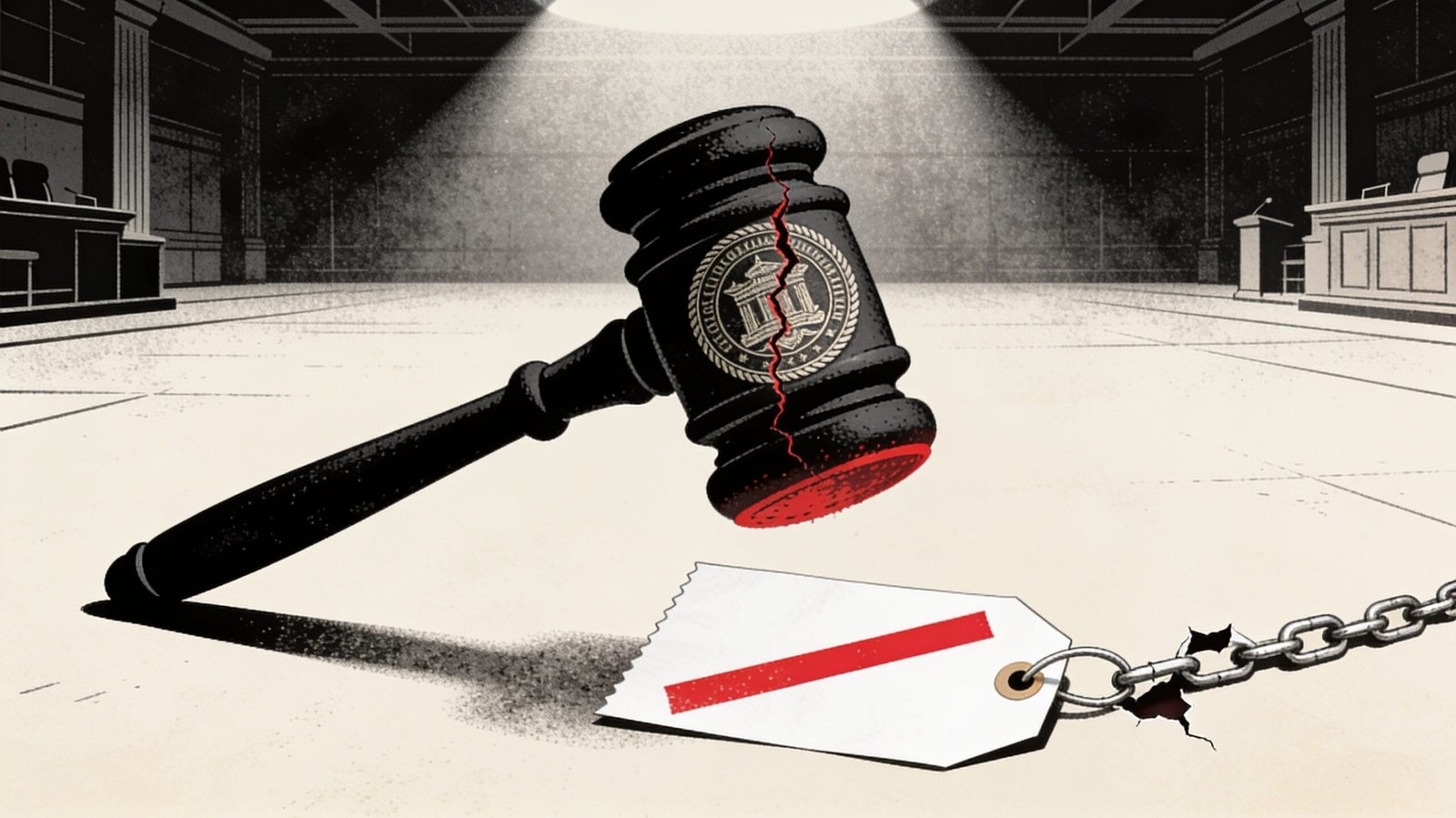
A federal judge has ruled the Pentagon’s supply-chain-risk designation of Anthropic PBC illegal. U.S. District Judge Rita Lin issued the 59-page order in California on the evening of Thursday, August 27, 2026, vacating Defense Secretary Pete Hegseth’s February 27, 2026 designation and permanently blocking enforcement of President Donald Trump’s directive ordering federal agencies to stop using Claude. Wired reported the ruling also removes penalties imposed by nine agencies, including the Pentagon, the Treasury Department, the State Department and the Department of Homeland Security. Anthropic PBC, the San Francisco model developer founded in 2021, filed two complaints against the Defense Department in March 2026, in California and Washington, D.C.
Fortune reported on August 28, 2026 that Lin found the government’s actions “were based on a desire to make a public example out of Anthropic for its ‘arrogance’ in criticizing the government, not based on any articulable basis to believe that Anthropic would actually sabotage its model.” The ruling converts a March 2026 interim posture into a permanent merits judgment, about six months after the dispute began. Lin, an appointee of former President Joe Biden, wrote that neither the Constitution nor the federal statute invoked lets the government “impose sweeping penalties based principally on Anthropic’s critique of the Administration’s views.” TechCrunch reported Lin separately found the designation violated Fifth Amendment due process.
Retaliation case reaches a permanent merits ruling
OpenAI moved into the gap within hours. CNBC reported that on February 27, 2026, hours after Hegseth’s designation, OpenAI announced an agreement for the Pentagon to use its models in classified systems, with CEO Sam Altman writing that enforcing the designation on Anthropic “would be very bad for our industry and our country.” Altman later conceded the timing “looked opportunistic and sloppy,” according to CNBC. OpenAI’s exact legal entity name and the contract’s financial terms were not disclosed. Fortune reported the designation was the first time the United States labeled an American company a supply chain risk, an authority historically reserved for foreign adversaries; the Information Technology Industry Council wrote to Hegseth on March 4, 2026 warning such emergency powers are “typically reserved for entities that have been designated as foreign adversaries.” In May 2026 the Defense Department announced classified-network agreements with seven companies: Google, OpenAI, Nvidia, Microsoft, Amazon Web Services, SpaceX and Reflection. Anthropic spokesperson Danielle Cohen said: “We welcome the court’s ruling that this supply chain risk designation was unlawful.”
The math behind a $965 billion valuation
Anthropic’s capital structure is the backdrop to the competitive landscape. The company closed a $30 billion Series G on February 12, 2026 at a $380 billion post-money valuation, led by GIC and Coatue and co-led by D.E. Shaw Ventures, Dragoneer Investment Group, Founders Fund, Iconiq Capital and MGX, according to Crunchbase News. On May 28, 2026 it closed a $65 billion Series H at $965 billion post-money, led by Altimeter Capital, Dragoneer, Greenoaks and Sequoia Capital, according to Reuters; Anthropic said proceeds fund safety research, compute and AI infrastructure. Step-up: $965 billion ÷ $380 billion = 2.5×. Revenue run rate: $9 billion at end-2025, $14 billion in February 2026, $47 billion in May 2026, $65 billion by end-July 2026 — $65 billion ÷ $9 billion = 7.2×. The canceled July 2025 Defense Department contract was worth $200 million. The structural asymmetry: a $200 million federal contract was stripped while the run rate grew 7.2× in seven months.
What the ruling changes for vendors and buyers
For AI vendors, the decision means a national-security label can no longer rest principally on policy speech. For investors, it removes a live overhang weeks before a listing: Anthropic has filed confidentially for an IPO, and Bloomberg has reported a debut as early as October 2026 with Goldman Sachs, JPMorgan and Morgan Stanley in early discussions. Anthropic is seeking a public valuation of $2 trillion or more, according to the Financial Times. Against Reuters-reported 2028 revenue guidance of $190 billion to $200 billion, $2 trillion ÷ $200 billion = 10.0× and $2 trillion ÷ $190 billion = 10.5×. For enterprise AI buyers, the order restores optionality on Claude in federal-adjacent workloads. Anthropic’s lawyer Michael Mongan told the July 30, 2026 hearing that the government’s actions “profoundly harm Anthropic” and “threaten more broadly to chill speech and debate on a very important issue.”
The win is partial. Lin affirmed the Pentagon “is undisputedly free to select the AI vendor of its choice,” and the order does not compel the Defense Department to buy Claude, according to Wired. A second Anthropic challenge, over a different supply-chain rule, remains pending before the federal appeals court in Washington, D.C., and the government is expected to appeal. The case number was not disclosed. Antitrust exposure: review status not disclosed, and no merger or acquisition is at issue. JV governance terms for the seven-company classified-network agreements were not disclosed. Cross-border regulatory exposure not disclosed, though the supply-chain-risk authority has historically targeted foreign adversaries.
What still remains unresolved
What did the court actually decide? Lin vacated Hegseth’s February 27, 2026 supply-chain-risk designation, found unlawful First Amendment retaliation and Fifth Amendment due-process failure, and called the decision “arbitrary and capricious”. How did the dispute begin? CNBC reported Hegseth met Anthropic CEO Dario Amodei on February 24, 2026 and set a Friday deadline for broad military access, threatening the designation or the Defense Production Act; the designation followed on February 27, 2026. Can the Pentagon still use Claude? The order bars the nine named agencies from enforcing Trump’s directive and lifts their penalties, but the Pentagon retains discretion to select other vendors. What is the second lawsuit? Anthropic filed it in March 2026 in Washington, D.C., challenging a different rule the Pentagon uses to declare it a supply chain risk; it is pending on appeal. How large is Anthropic now? CFO Krishna Rao said the run rate crossed $47 billion in May 2026; Bloomberg and Reuters put it above $65 billion by end-July 2026.
Lin’s 59-page order vacates a $200 million-contract-ending designation that Fortune reported was the first ever applied to an American company. The verified limits are real: the ruling restores Anthropic’s federal standing but leaves vendor selection with the Pentagon, leaves the D.C. Circuit case open, and invites a government appeal. Federal security designations now carry a First Amendment ceiling that the executive branch must litigate around rather than through.
| Founded: | 2021 |
| HQ: | San Francisco, California |
| Founder/CEO: | Dario Amodei |
| Post-money valuation: | $965 billion (Series H) |
| Round | Date | Amount | Lead | Valuation | Co-Investors |
|---|---|---|---|---|---|
| Series G | Feb 12, 2026 | $30 billion | GIC, Coatue | $380 billion post-money | D.E. Shaw Ventures, Dragoneer Investment Group, Founders Fund, Iconiq Capital, MGX |
| Series H | May 28, 2026 | $65 billion | Altimeter Capital, Dragoneer, Greenoaks, Sequoia Capital | $965 billion post-money | Not specified |
Frequently Asked Questions
What does Anthropic PBC do?
Anthropic PBC is a San Francisco-based artificial intelligence company founded in 2021. It develops the Claude model family and focuses on AI safety research. The company raised substantial funding from major investors and reported a revenue run rate of over $65 billion by mid-2026, making it one of the most valuable private AI firms.
What did the judge rule in the Anthropic case?
U.S. District Judge Rita Lin vacated Defense Secretary Pete Hegseth’s February 2026 supply-chain risk designation of Anthropic PBC. She found the government’s actions were based on retaliation for Anthropic’s criticism and violated the Fifth Amendment’s due process. Lin permanently blocked enforcement of President Trump’s directive to stop federal agencies from using Claude.
Can the Pentagon still use Claude after the ruling?
The order blocks enforcement of Trump’s directive and lifts penalties from nine agencies, but it does not compel the Pentagon to buy Claude. The judge affirmed the Pentagon’s discretion to select its own AI vendors. The supply-chain label was vacated, yet the government may choose alternatives or appeal.
What is the second lawsuit about?
Anthropic filed a second challenge in March 2026 in Washington, D.C., contesting a different supply-chain rule the Pentagon uses. That case remains pending in the federal appeals court. The government is expected to appeal the California ruling as well, so legal uncertainty continues.
How large is Anthropic now?
Anthropic’s revenue run rate reached $47 billion in May 2026 and surpassed $65 billion by end-July 2026, according to Bloomberg and Reuters. The company closed a $65 billion Series H at a $965 billion post-money valuation and confidentially filed for an IPO.