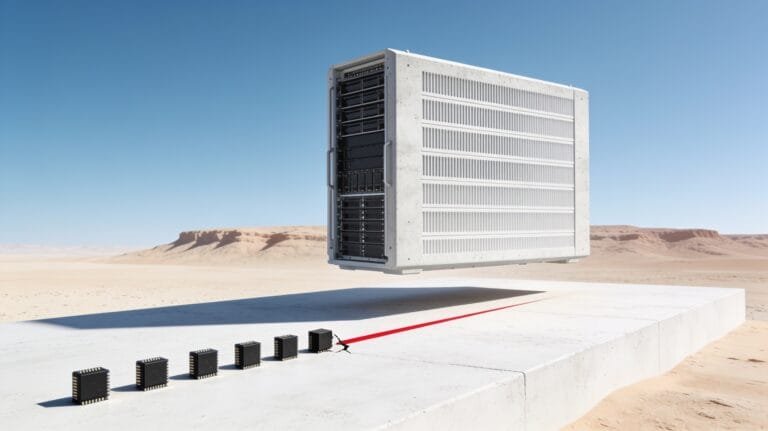
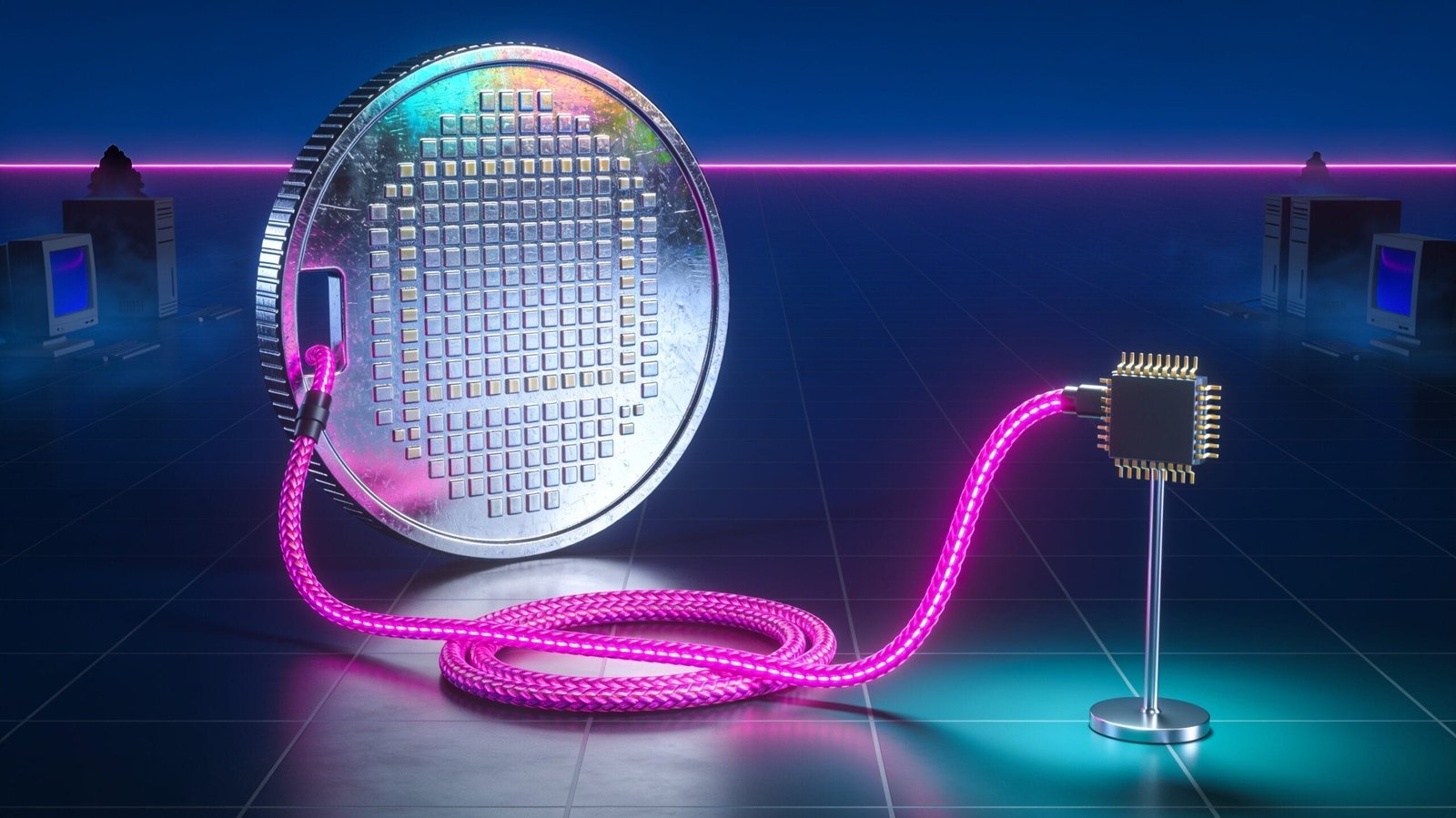
Nvidia’s $3.5 billion convertible-bond deal with MediaTek lifted the Taiwanese chipmaker’s shares 10% on Tuesday, September 1, 2026. The companies announced the expanded partnership in a joint statement issued from Santa Clara, Calif., on Monday, August 31, 2026. Nvidia is the sole named investor, taking $3.5 billion of convertible bonds issued by MediaTek (2454.TW); other subscribers to the wider $3.9 billion offering were not disclosed. Under the operating model, MediaTek adopts Nvidia’s NVLink Fusion platform for customers building custom XPUs, alongside joint work on RTX Spark and DGX Spark PC chips and automotive platforms. Nvidia alone accounts for 89.7% of the offering ($3,500M ÷ $3,900M = 89.7%), which Forbes described as the largest convertible offering MediaTek has brought to market.
CNBC reported on September 1, 2026 that the deal fueled a near 200% rally in MediaTek shares in 2026. The pressure behind the move is structural: hyperscalers and AI developers are designing their own silicon, according to CNBC, and Nvidia’s answer indicates how it reads that threat. Nvidia’s platform strategy is capital deployment with conditions: it is not buying a rival to its GPUs; it is funding a custom-accelerator designer on condition those accelerators connect through NVLink. MediaTek’s prior funding history includes the July 31, 2026 board approval of a $5 billion discretionary financing budget, according to Reuters, and October 31, 2025 guidance of $1 billion in 2026 cloud AI chip revenue, later doubled to more than $2 billion. Its 2027 market estimate rose from $50 billion to $80 billion: $80,000M ÷ $50,000M = 1.6×.
Nvidia buys the interconnect, not the chip
Broadcom Inc. (AVGO) shipped $10.80 billion of AI semiconductor revenue in the second quarter of fiscal 2026, up 143% year over year, with bookings above $30 billion and a $16 billion AI guide for the third quarter, according to Zacks. Broadcom self-funds with no strategic investor on its cap table, and CEO Hock Tan has projected more than $100 billion in AI chip sales by 2027. Prior history: the Google TPU program and an Apple contract reported by 24/7 Wall St at over $30 billion through 2031. Marvell Technology Inc. (MRVL) sits between the two camps, having taken a $2 billion Nvidia investment announced in March 2026 alongside NVLink Fusion work, silicon photonics and scale-up networking — the clearest sign of Nvidia’s portfolio reach in the competitive landscape. Jensen Huang, founder and CEO of Nvidia, said in the August 31, 2026 joint statement: “AI is transforming every computing platform — from the world’s largest AI factories to the PC and the car.”
Broadcom’s table versus Nvidia’s table
MediaTek investor roster: Nvidia Corp., $3.5 billion in convertible bonds; remaining subscribers to the $3.9 billion offering not disclosed; special financial terms — conversion price, coupon, maturity — not disclosed. Broadcom investor roster: none disclosed; Broadcom self-funds, with a share repurchase program of up to $10 billion announced March 4, 2026, according to Reuters. Structural asymmetry: Nvidia’s $3.5 billion is 1.75× its $2 billion March 2026 investment in Marvell ($3,500M ÷ $2,000M = 1.75×) and 0.7× its $5 billion September 2025 Intel commitment. On revenue, MediaTek’s guidance moved from $1 billion (October 31, 2025) to $2 billion (May 29, 2026) to more than $2 billion for 2026 (July 31, 2026), a sequence CNBC dated to June; its 2027 addressable market moved from $50 billion to $70-80 billion to $80 billion, with share target raised to 15%-20% from 10%-15%. Target sectors: Nvidia — AI infrastructure, PCs, automotive; MediaTek — smartphones, data centers.
Guidance moved faster than revenue
For MediaTek, the decision means a named backer for a business it has positioned as its next growth engine beyond smartphones. For Nvidia, it means revenue from custom silicon it does not design, as long as that silicon speaks NVLink. For hyperscaler customers, it means another design-house option alongside Broadcom and Marvell. Rick Tsai, vice chairman and CEO of MediaTek, said in the August 31, 2026 statement carried by Business Insider: “MediaTek and Nvidia share a vision for making advanced AI computing pervasive across the technology landscape.” Governance structure for the partnership — board representation, veto rights and IP ownership — was not disclosed. Tsai’s framing on the October 31, 2025 earnings call reported by Reuters was that the first project would generate multiple billions in 2027 and a second would deliver revenue from 2028. No IPO timeline applies: MediaTek trades as 2454.TW and Nvidia as NVDA.
Risks sit in the instrument and the guidance. The bonds are convertible, so dilution depends on terms — conversion price, coupon, maturity — not disclosed. Antitrust review status not disclosed for the $3.5 billion transaction, which crosses the US and Taiwan; cross-border regulatory exposure not disclosed, though Nvidia zeroed China data-center compute from guidance after H20 export restrictions, according to 24/7 Wall St. The revenue discrepancy remains open: CNBC reported on September 1, 2026 that it reached out to MediaTek to ask whether the deal changes the $2 billion 2026 guidance, with no answer. MediaTek’s mobile-chip revenue fell 20% year over year in the second quarter of 2026, according to Reuters. Broadcom’s next earnings land September 8, 2026, per 24/7 Wall St.
What to watch next
What did Nvidia buy in MediaTek? Nvidia invested $3.5 billion in convertible bonds issued by MediaTek, announced in a joint statement on August 31, 2026, part of a $3.9 billion convertible offering. What does NVLink Fusion give MediaTek customers? A prevalidated path for custom XPUs into Nvidia’s rack-scale AI factories, built on the NVLink Fusion chiplet, NVLink-C2C links to Nvidia Rosa CPUs and NVHBM memory. MediaTek joins Marvell Technology and, according to Yahoo Finance, Alchip Technologies there. How big is MediaTek’s custom AI chip business? More than $2 billion of 2026 data-center revenue is guided, against a 15%-20% target share of an $80 billion 2027 market: $80,000M × 0.15 = $12,000M and $80,000M × 0.20 = $16,000M. (STATED, ) Does this hurt Broadcom? Broadcom shipped $10.80 billion of AI semiconductor revenue in one quarter of fiscal 2026 — $10,800M ÷ $2,000M = 5.4× MediaTek’s full-year 2026 target. Antitrust review status was not disclosed.
Nvidia’s $3.5 billion is the largest disclosed external commitment to MediaTek’s custom-silicon push as of August 31, 2026. The verified risk is that MediaTek’s 2027 share target rose from 10%-15% to 15%-20% in one quarter while its first accelerator only entered production in the fourth quarter of 2026. The deal attaches custom-chip growth to Nvidia’s interconnect rather than displacing it.
Founded: 1993
HQ: Santa Clara, California
Company: Nvidia Corp.
Deal: Nvidia’s $3.5 billion convertible-bond investment in MediaTek
| Round | Date | Amount | Lead | Valuation | Co-Investors |
|---|---|---|---|---|---|
| No traditional venture rounds | August 31, 2026 | $3.5B convertible bond | Nvidia | Not disclosed | Other subscribers to $3.9B offering not disclosed |
| No traditional venture rounds | March 2026 | $2B investment in Marvell | Nvidia | Not disclosed | Not disclosed |
| No traditional venture rounds | September 2025 | $5B Intel commitment | Nvidia | Not disclosed | Not disclosed |
Frequently Asked Questions
What does Nvidia do?
Nvidia designs graphics processors, AI accelerators, networking platforms, and software for data centers, PCs, automotive systems, and edge computing. Its GPUs and CUDA ecosystem support AI training, inference, simulation, and accelerated computing. Nvidia also licenses interconnect technologies such as NVLink, enabling partners to build custom AI chips that connect to its rack-scale infrastructure.
What is Nvidia’s $3.5 billion convertible-bond deal?
Nvidia’s $3.5 billion convertible-bond deal is an investment in MediaTek’s convertible offering, announced August 31, 2026. Nvidia is the sole named investor in a $3.9 billion offering. The deal supports MediaTek’s custom AI chip work and gives Nvidia a strategic role in NVLink Fusion, RTX Spark, DGX Spark, and automotive platform development.
Why did MediaTek shares rise after the Nvidia deal?
MediaTek shares rose because Nvidia’s $3.5 billion convertible-bond investment validated its custom AI chip strategy and linked its XPUs to Nvidia’s NVLink Fusion ecosystem. Investors also interpreted the deal as a competitive counterweight to Broadcom and Marvell, while MediaTek’s 2026 cloud AI revenue guidance moved above two billion dollars in the market.
What does NVLink Fusion give MediaTek customers?
NVLink Fusion gives MediaTek customers a prevalidated path for custom XPUs into Nvidia’s rack-scale AI factories. It combines the NVLink Fusion chiplet, NVLink-C2C links to Nvidia CPUs, and NVHBM memory. This helps customers design accelerators that connect to Nvidia infrastructure without building a separate interconnect ecosystem from scratch for AI workloads.
What risks remain in the Nvidia-MediaTek deal?
Risks include undisclosed convertible-bond terms, potential dilution, antitrust review status, and cross-border regulatory exposure between the United States and Taiwan. MediaTek’s guidance also moved faster than revenue, while its mobile-chip revenue fell twenty percent year over year. Investors still need clarity on governance, IP ownership, and whether the deal changes 2026 targets.